
A few years ago, “budget phone” basically meant a list of apologies. Laggy chipset, sorry. Mediocre screen, sorry. Camera that falls apart the second the sun goes down, also sorry. That’s mostly not true anymore. Phones under $500 in 2026 borrow display tech, camera processing, and battery tricks that used to be locked behind flagship pricing.
The problem is that spec sheets don’t tell you much these days, because every phone in this range now claims a “flagship-level” camera or “all-day” battery. What actually separates a good $400 phone from a forgettable one only shows up after a week or two of normal use, not in the first ten minutes with it in the store.

I spent close to a month living with four phones that consistently show up at the top of this price bracket: the Google Pixel 10a, the Nothing Phone 3a, the Samsung Galaxy A56, and the Motorola Edge 60 Fusion. Each one became my main phone for several days at a time. Texting, navigating, shooting photos in bad lighting, streaming on a flight, gaming during a lunch break. Here’s what actually held up, what didn’t, and which one is worth your money depending on what you care about most.
How I Tested These Budget Phones
Specs sheets are basically marketing copy at this point. Every phone under $500 now claims a “flagship-level” camera or an “all-day” battery, so I tried to test for things that actually show up in daily life rather than just benchmark numbers.
Here’s what I paid attention to with each phone:
- Battery life under real use. Not a synthetic test, just normal mixed use: messaging, social media, music, a couple of YouTube videos, some navigation.
- Camera performance in mixed lighting. Daylight is easy for every phone now. I cared more about dim restaurants, cloudy afternoons, and backlit shots.
- Day-to-day speed. App switching, typing lag, how the phone feels after a week of accumulated background apps, not just how it feels fresh out of the box.
- Software support timeline. How many years of updates you’re actually getting, because that affects resale value and how long the phone stays usable.
- Build quality. Whether it feels like a $500 phone or a $300 phone wearing a $500 price tag.
None of these phones are bad. The differences between them are about trade-offs, not winners and losers, and that’s the part most “Top 10” lists gloss over.
Google Pixel 10a: The Safest Pick, With One Annoying Catch
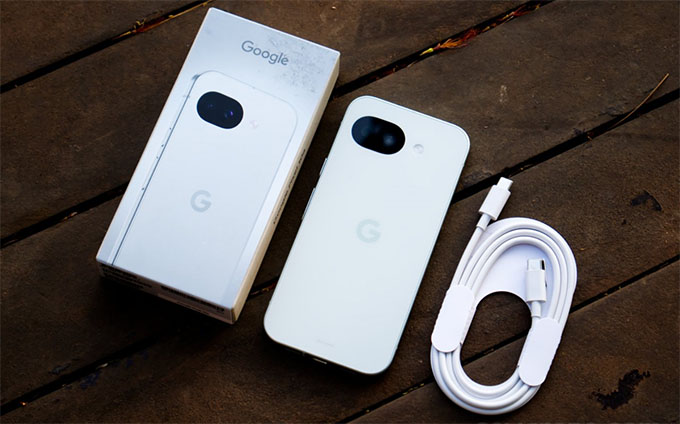
The Pixel 10a starts at $499 for 128GB, which puts it right at the edge of this list’s budget. It recycles much of the same hardware as its predecessor, the Pixel 9a, including the Tensor G4 chip and a similar dual camera system.
That sounds like a letdown on paper, but in daily use it barely matters. The camera is still the best reason to buy this phone. It uses a 6.3-inch Actua pOLED display that’s genuinely pleasant to look at, with a 1080 x 2424 resolution that holds up well against actual flagships. Photos taken indoors, at dinner, in that awkward yellow-tinted lighting most restaurants have, this is where the Pixel pulled ahead of every other phone on this list. It just handles tricky light better, full stop.
The trade-off is the chip. Google kept the same Tensor G4 processor instead of moving to the newer Tensor G5, which means this isn’t the fastest phone in its price class. I didn’t notice it during normal scrolling or texting, but heavier games did show some hitching that I didn’t get on the Motorola.
What makes the Pixel 10a worth the asking price long-term isn’t the chip or even the camera. It’s the update policy. Google promises seven years of software updates, which is close to best-in-class for this category. If you’re the type who keeps a phone for four or five years instead of upgrading every cycle, this number alone might decide it for you.
One small but real annoyance: the bezels are noticeably chunkier than on Google’s pricier Pixel models, giving it about an 84% screen-to-body ratio compared to 88% on the Pro models. You won’t notice it unless you’re holding both phones side by side, but it’s there.

Best for: people who want the best camera in this price range and plan to keep the phone for years, not just until the next upgrade cycle.
Nothing Phone 3a: The Most Fun Phone Under $400
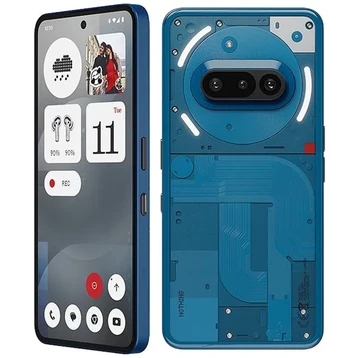
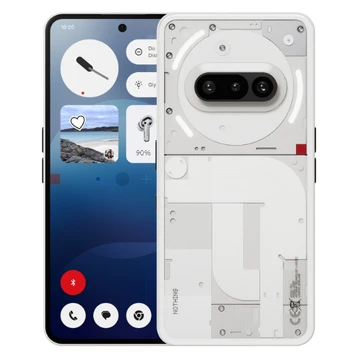
The Nothing Phone 3a costs $379 in the US, making it the cheapest phone on this list by a wide margin. Which makes what it includes even more surprising.
The screen is the standout. It runs a 120Hz LTPO display, a technology usually reserved for pricier phones, and it dynamically adjusts the refresh rate to help battery efficiency. Peak brightness hits 3000 nits, so visibility outdoors in direct sun was never an issue during my testing.
Battery life surprised me too. During a two-hour Netflix streaming session at high brightness and decent volume, the battery only dropped to 86%, which tracks with how it held up across my own daily testing. On a normal day of texting, social media, and some music, I rarely felt nervous about battery by evening.
The camera setup is genuinely unusual for this price. It includes a dedicated telephoto lens, a feature you almost never see on a sub-$400 phone. Zoomed shots weren’t flagship-tier, but having any dedicated zoom lens at all at this price is rare enough to call out.
It’s not without quirks, though. There’s no charger included in the box, and the proprietary fast charger is sold separately and isn’t cheap. Also worth noting if you’re outside the US: the US only gets the 256GB storage configuration, while other regions can choose a cheaper 128GB model. Wireless charging is also absent, which felt like the one obvious gap on an otherwise well-rounded phone.
Best for: buyers who want the most distinctive design and display quality for the least money, and don’t mind skipping wireless charging.
Samsung Galaxy A56: The Dependable, Slightly Boring Choice
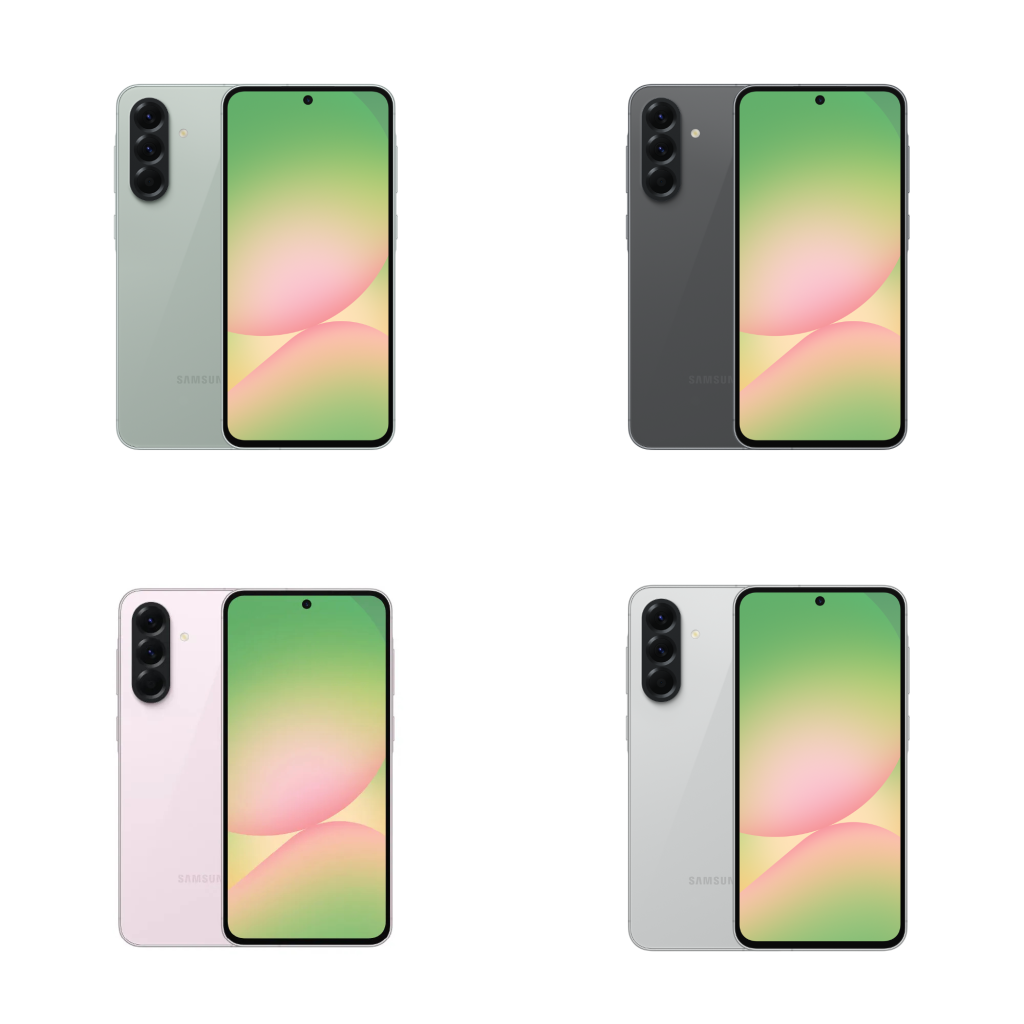
The Galaxy A56 sits around $430 to $500 depending on storage and retailer, and it’s the phone I’d hand to someone who just wants things to work without thinking about it.
It runs Samsung’s Exynos 1580 chipset with 8GB of RAM and a 6.7-inch Super AMOLED display at 120Hz. Day-to-day, it felt smooth and predictable. Not exciting, but reliable in the way a Samsung A-series phone has always been reliable.
Battery performance was a pleasant surprise. With normal use, social media, YouTube, messaging, it consistently lasted to the end of the day with 30 to 40 percent still left, and the 45W charging filled it up in under an hour. That’s the same charging speed as Samsung’s actual flagship line, which isn’t something you expect at this price.
Where it falls a bit flat is the camera. In daylight, photos came out crisp with natural colors and the ultrawide handled landscapes fine, but the macro lens barely produces anything useful, which is a recurring complaint across the entire A-series. If photography is your main priority, this isn’t the pick.
Build quality is genuinely solid, though. It carries an IP67 rating for water resistance at one meter depth, a feature that’s uncommon at this price point. I dropped it once, by accident, on a tile floor. No cracks, just a scuff on the frame.
Best for: people who want a no-surprises phone with Samsung’s long software support and don’t care much about cutting-edge camera tech.
Motorola Edge 60 Fusion: Best Battery and Charging Speed
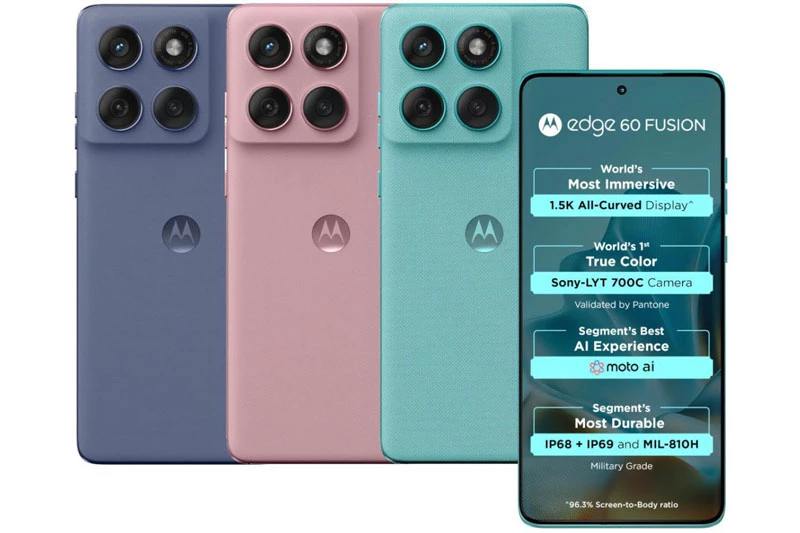
The Edge 60 Fusion is priced around $300 to $350, and it quietly does the one thing every budget phone buyer secretly wants most. It doesn’t run out of battery on you.
Third-party lab testing measured active use time at 14 hours and 18 minutes, a number that held up in real-world conditions rather than just synthetic benchmarks. Across my testing week, this was the only phone I genuinely stopped worrying about by mid-afternoon.
Charging speed is the other headline feature. It charges at 68W, with lab testing clocking a full charge in 45 minutes, while most phones at this price are stuck at 18 to 33W and take well over an hour. A 15-minute top-up in the morning was enough to forget about the charger for the rest of the day.
Build quality punches above its price too. It has IP68/IP69 ingress protection and complies with the MIL-STD-810H durability standard, on top of a soft eco-leather back that feels noticeably nicer than plastic.
Performance is the trade-off here. Independent scoring rated it below average on heavy performance tasks compared to similarly priced competitors, even though it scored well above average on battery life and charging. I felt this mostly in demanding games. Frame drops showed up sooner than on the Pixel or the Galaxy A56.
Best for: people who hate charging their phone constantly and care more about battery and build quality than raw speed.
Quick Comparison: Which Budget Phone Should You Buy?
| Phone | Price | Strongest Feature | Weakest Feature |
|---|---|---|---|
| Google Pixel 10a | $499 | Camera quality, 7 years of updates | Same chip as last year |
| Nothing Phone 3a | $379 | Display and unique design | No charger included, no wireless charging |
| Samsung Galaxy A56 | $430 to $500 | Build quality, fast charging | Weak macro camera |
| Motorola Edge 60 Fusion | $300 to $350 | Battery life, charging speed | Weaker gaming performance |
Final Verdict
If I had to pick just one for most people, it’s the Pixel 10a. The camera alone justifies the price for anyone who takes more than a handful of photos a month, and seven years of updates means you’re not forced into another purchase in two years.
But “best overall” isn’t the same as “best for you.” If your battery anxiety is the real problem you’re trying to solve, the Motorola Edge 60 Fusion will fix it for $150 less than the Pixel. If you want something that doesn’t look like every other black slab in someone’s hand, the Nothing Phone 3a is the most interesting phone on this list by far. And if you just want a phone that won’t surprise you in any direction, good, bad, or otherwise, the Galaxy A56 is the safe, sensible answer.
None of these phones are perfect. That’s sort of the point of this price bracket. You’re choosing which compromise you’re willing to live with, not chasing a phone that has none.