
When your computer freezes or becomes unresponsive, it can be frustrating. From working on a crucial project to simply browsing, a frozen screen can put a damper on your day. Fortunately, there are a number of ways to resolve a stuck or nonresponsive computer, Windows PC, or Mac. This guide will guide you through easy steps that can solve your frozen computer.
Identify the Problem
Let’s try to identify the problem before getting into action. Is it one program that’s still frozen, or is the whole system locked up? Other times, only one application is no longer working, and the rest of the system is perfectly fine. In some cases, everything may freeze up all at once.
Try to close the frozen app.
If the first thing you can try is to close down a single program if it’s unresponsive.
On Windows:
- You can press Ctrl + Shift + Esc to open the Task Manager.
- Navigate to the Processes tab and find the frozen application.
- Now, right-click the app and click on End Task.
On Mac:
- Open the Force Quit Applications window (press Command + Option + Esc).
- Click the frozen app and select Force Quit.
That should terminate the frozen app and set your computer back to normal.
Restart Your Computer
If closing the application doesn’t help, the next step is to reboot your computer. You know, sometimes restarting it is all you need to fix the problem.
For Windows:
- Так, що натисніть Ctrl + Alt + Delete, щоб відкрити меню Security Options.
- Внизу справа щелкните Перезагрузить.
For Mac:
- And if that doesn’t work, hold the power button until your Mac powers off.
- Wait a few seconds and press the power button again to turn it back on.
Rebooting your computer can get rid of any temporal errors and boost performance.
Use Safe Mode (Windows).

If your Windows PC keeps freezing, even after a reboot, booting into Safe Mode could do the trick. Safe Mode loads only the most fundamental system programs, which may help you isolate the problem.
Steps to boot Windows into Safe Mode:
- When your computer is booting, restart it and tap F8 (or Shift + F8 for more recent versions).
- In the boot options menu, choose Safe Mode.
- Start troubleshooting or uninstalling conflicting software updates or programs once you are in Safe Mode.
Reset NVRAM (Mac)
Resetting the NVRAM (Non-Volatile Random Access Memory) can also fix an unresponsive Mac sometimes. When those get corrupted, they can cause your Mac to freeze, or so it seems: NVRAM stores certain settings.
To reset NVRAM:
- Turn off your Mac.
- Turn it on and immediately hold down Option + Command + P + R for about 20 seconds.
- Release the keys and let the Mac boot.
When you reset the NVRAM, it clears some minor system settings and fixes freezing issues.
Check for Software Updates
If the app or system is outdated, the instability can lead to freezing. Ensure that your operating system and applications are current. Software updates frequently come with bug fixes and performance enhancements that can correct problems.
For Windows:
- Navigate to Settings > Update & Security.
- Click Check for Updates.
For Mac:
- Visit System Preferences > Software Update.
- If updates are available, click Update Now.
Updating your system prevents freezing and keeps it running smoothly.
Disconnect External Devices
In some cases, attached devices such as printers and USB drives or an external monitor start freezing your computer. All you have to do now is remove all accessories from the PC and see if it becomes effective once more.
On Windows:
- Disconnect all USB devices, printers, or other peripherals.
- Restart your computer.
On Mac:
- Remove any peripherals.
- Restart your Mac.
This will help to determine whether one of the connected devices is to blame for the issue.
Run a System Scan (Windows)
A Windows PC that is either frozen or not responding could be infected with malware or have corrupted system files. Performing a system scan can help identify and resolve such issues.
To run a system scan:
- Go to Settings > Update & Security.
- Choose Windows Security and select Virus & threat protection.
- For a more in-depth check, click Quick Scan or Full Scan.
If you suspect malware, you can also run a scan with third-party antivirus software.
- Run Disc Utility (Mac).
If your Mac is freezing, running the Disc Utility to check your hard drive for errors may assist. The tool can repair errors on your disc, which may be causing your Mac to freeze.
To run Disc Utility:
- Open Applications → Utilities → Disc Utility.
- Choose your hard drive and click First Aid.
- Press Run to identify and resolve errors.
This task might be long, but it can solve problems with a corrupt disc.
- Free Up Storage Space
As your computer’s hard drive fills up, it can become sluggish, even freezing. Clearing space can give a little boost to your system.
For Windows:
- Open Settings > System > Storage.
- Delete temporary files via the Storage Sense feature to save space.
For Mac:
- Head to About This Mac > Storage.
- Delete unnecessary files, apps, and old backups with Use Manage.
Freeing up storage space can boost your computer’s performance and lessen freezing.
- Try a System Restore (Windows).
If your Windows PC is still freezing, you might as well restore it to a point in time where things were running fine. This is called a system restore.
To perform a system restore:
- Go to this path: Control Panel > Recovery.
- Select Open System Restore.
- Follow the prompts to select a restore point from before the issue began.
It can reverse system changes that could be behind freezing, like updates or applications that were recently installed.
- Reset SMC (Mac)
SMC: The System Management Controller (SMC) is responsible for low-level functions on your Mac, such as battery management and sleep settings. If your Mac freezes or is unresponsive, you can try resetting the SMC.
To reset the SMC:
- Shut down your Mac.
- On laptops featuring a T2 chip, press and hold Shift + Control + Option on the left side, as well as the Power button, simultaneously for 10 seconds.
- Release all the keys and restart the Mac.
To fix power-related issues and increase performance, reset the SMC.
- OS Reinstallation
And if the above does not work, the last resort could be to reinstall the operating system. Reinstallation can eliminate any software problems that may cause the freeze.
For Windows:
- Open Settings > Update & Security.
- Click Recovery and choose Reset this PC.
For Mac:
- Reboot your Mac into macOS Recovery by holding Command + R. Next, connect your internet, and when you see the Utilities window, select Disc Utility.
- Select Reinstall macOS.
The benefit of using this method is that you can fix certain problems without restarting. Keep in mind that restoring the OS will delete everything (files and configuration), so we’d recommend creating a backup if you decide to go this route.
- Check Hardware Issues
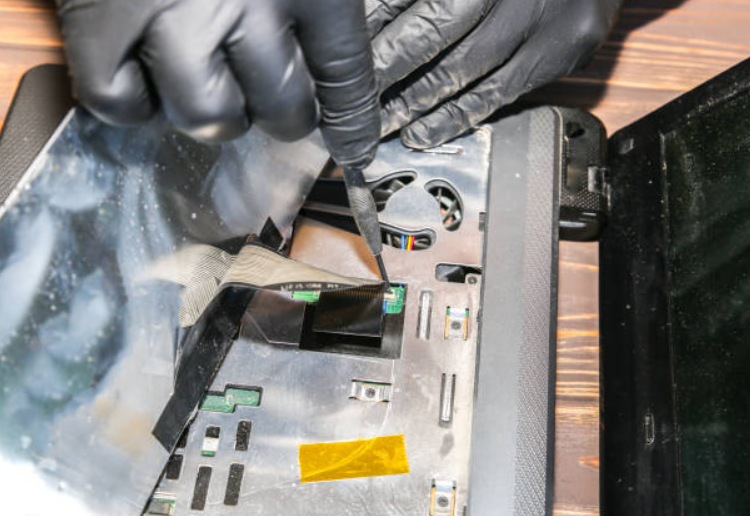
If the computer continues to freeze despite all the software solutions, the failure may be in the hardware. Hard disc, RAM, or motherboard problems can render either of the systems unresponsive.
[Third-party image] Consider running hardware diagnostics to look for any issues. On Windows, you can access the Windows Memory Diagnostic tool already part of the operating system. Apple Diagnostics on Mac.
If you think the problem might be hardware-related, you may want to take the machine in to a repair shop to get a professional diagnosis.
Conclusion
Another computer freezes or is not responsive, even though it is rubbish, but there are solutions that you can ensure. Most issues can be solved with some effort, from rebooting your system and forcibly quitting frozen apps to running system scans and installing software updates. If the problem continues to exist, you may need to do a system restore, reinstall the operating system, or check hardware issues. How to unfreeze your computer and return to work as soon as possible.